2024-10-08 – 19:00 to 21:00
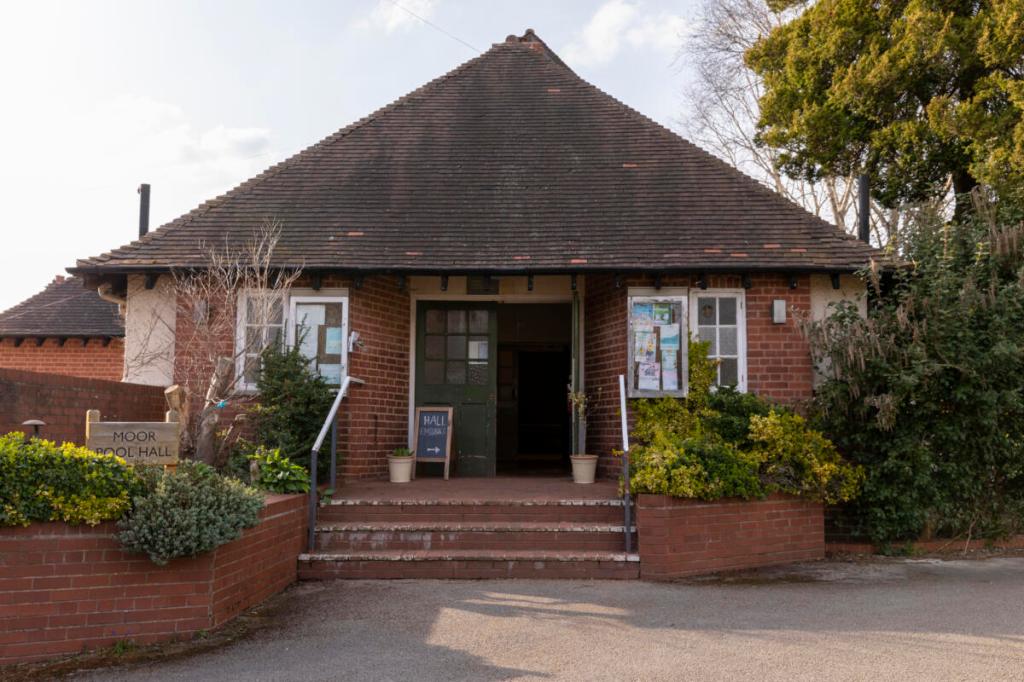
Moor Pool Lower Hall
Attendance – 13
Context
This is a regular monthly meeting, held on the second Tuesday of the month in a different location.
This time we are meeting at the Moor Pool Lower Hall as it seemed the most appropriate place to discuss plans to introduce traffic measures in the Moor Pool area.
Intro
Welcome. It was good to see a mix of new faces along with some Better Streets regulars. It was especially good to see members of both the Moor Pool Residents Association and trustees from the Moor Pool Heritage Trust.
We have identified a small pot of funding from the Clean Air Zone that is ring fenced for developing schemes that support reducing air pollution and promoting active travel (walking, wheeling and cycling). Approximately £80k.
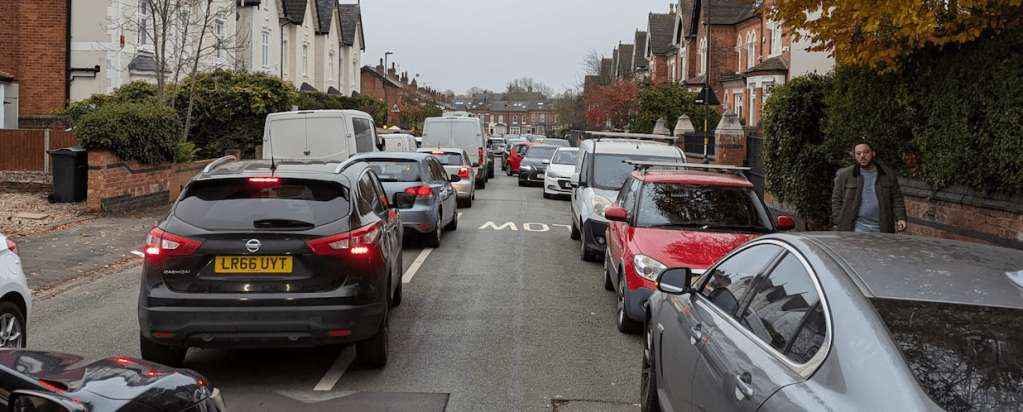
In a previous meeting we discussed various issues around Harborne and particularly identified the Moor Pool area. We talked about possible schemes that could be implemented to mitigate increasing levels of traffic in residential areas.
- Traffic reduction schemes using modal filters (bollards) – Often referred to as Low Traffic Neighbourhoods (LTNs)
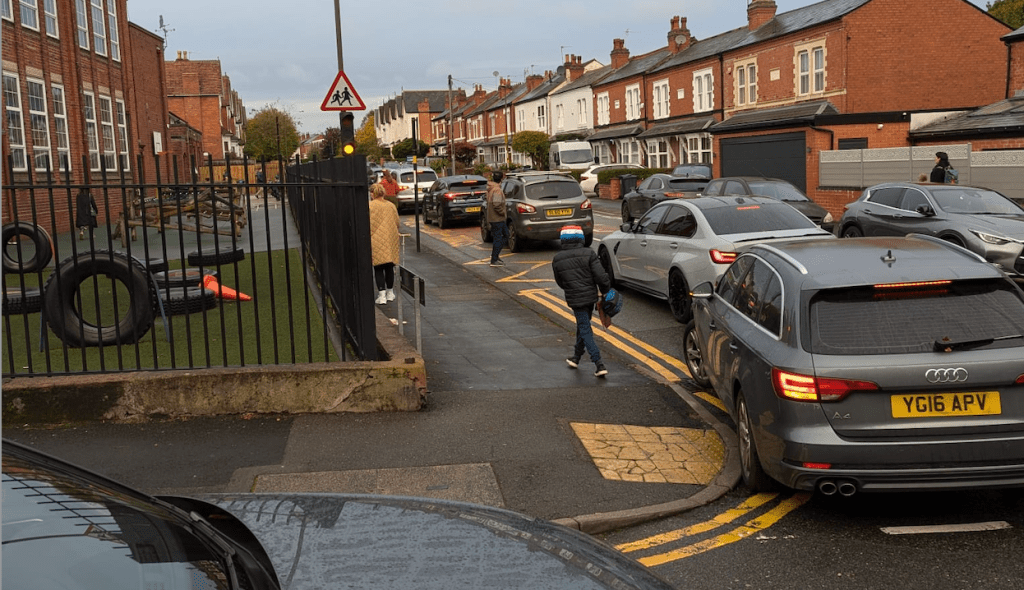
- School Streets (temporary road closures at pick-up/drop off times)
- Traffic calming
We believe Moor Pool’s school catchment areas, natural boundaries and active community make it the perfect candidate for developing traffic management schemes.
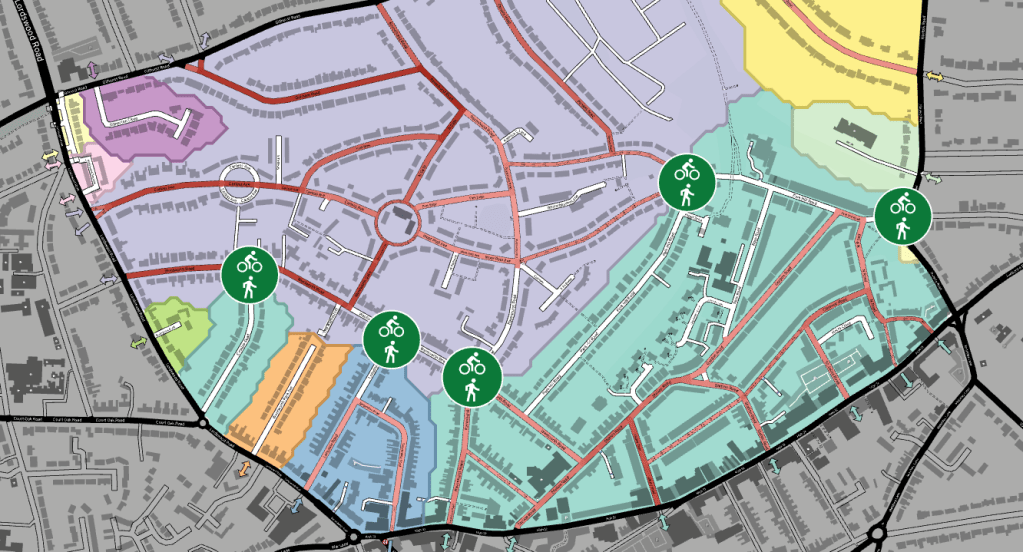
We also qualified what area we meant by Moor Pool. Boundaries of Gillhurst Road, Lordswood Road, High Street, Nursery Road.
Experiences from Kings Heath – Mat Mcdonald, Chair of Better Streets for Birmingham
Mat began by asking the group for their concerns about development of Low Traffic Neighbourhoods. Items raised at this point were as follows:
- Pushing problems to other areas
- Do School Streets actually work?
- They rely on goodwill and ongoing community maintenance
- Are there reports from other areas? Not as much as we would like
- Are the problems with schools where wealthy people buy second properties to get in to catchment areas
- That Low Traffic Neighbourhoods have the appearance of being self-serving for already affluent areas.
Mat then proceeded to his presentation (see separate document). The key topics covered are:
- A personal journey through a new LTN
- Setting the context for changing public space
- Setting the narrative
- What does success / failure look like?
- How will this be measured?
- What to expect when bollards appear
- Opposition from boundary road residents groups, local businesses, disability groups
- Pre-empt changes with information about scheme
- Effective engagement
- Measure a lot, before and after
- Keeping hope and making a difference

Traffic data presentation
Dan presented us with traffic counts and speeds that he had collected. He issued various caveats,
- Not a professional traffic survey. Intended only to inform the LTN exploratory team
- In some areas e.g. Harborne Primary School (HPS), expect flow to vary significantly through the day
- In other areas, expect less variation (see DFT Carless Avenue)
- Speed measurements are not police-standard (equipment, angles, etc)
- Some flows through some junctions are rare, but the results here do show the principal flows with confidence
The main conclusions were:
- Some areas, e.g HPS, that the counts are very high.
- The entry and exit points of traffic flows at the major junctions surveyed were consistent with traffic just passing through, rather than being local traffic originating with residents.
- Speeding is almost universal, with some very high speeds on wider roads.
- Busy narrow roads seem to encourage racing to avoid meeting oncoming traffic.
- That there are hardly any bikes even on a nice day, indicating perhaps that people don’t feel safe to use this alternative form of transport.
See separate presentation document for full details.




 Better Streets for Harborne & Quinton